Artificial intelligence is changing how people learn, work, communicate, and manage everyday tasks. Moreover, smart chat tools are becoming increasingly useful because they answer simple questions and help businesses serve customers more efficiently.
An ai chatbot robot is a digital assistant that communicates with people through text or voice. It can answer questions, explain difficult topics, suggest ideas, and support many daily activities.
However, not every chatbot works in the same way. Some provide simple answers, while others can analyze files, create content, or use connected tools. Physical robots can also use artificial intelligence to understand instructions and interact with their surroundings.
In 2026, the focus is shifting toward assistants that do more than respond to individual messages. Newer AI systems can help complete longer tasks, although their abilities and reliability vary. OpenAI Help Center+1
Whether you’re a student, freelancer, business owner, or technology enthusiast, understanding these tools can help you make better choices.
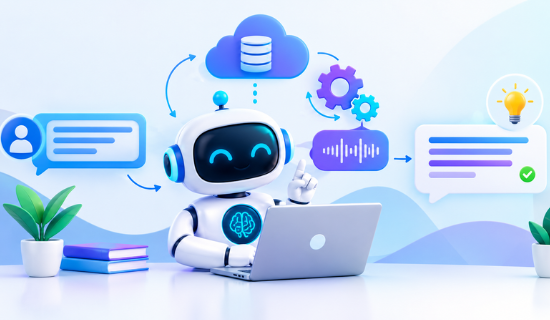
What Is an AI Chatbot Robot?
An ai chatbot robot is software designed to understand human questions and generate useful responses. It uses artificial intelligence to process language, identify patterns, and produce relevant answers.
Despite the word “robot,” many chatbot tools exist entirely online. You can access them through websites, mobile applications, messaging platforms, or business support systems.
A physical AI robot is different. It combines intelligent software with hardware, such as cameras, sensors, motors, and other electronic parts.
For example, a website chatbot might answer customer questions about delivery. Meanwhile, a physical robot might recognize objects and move around a room.
Both technologies can use AI, but their abilities depend on their design and connected systems.
How Does an AI Chatbot Robot Work?
These systems combine several technologies to understand requests and create responses. The exact process depends on the model and its features.
1. Understanding the question
You enter a message or speak into a microphone. The system processes your input and identifies the main request.
2. Processing information
The AI model uses learned patterns and available context to determine a suitable response. Some systems can also search connected information sources.

3. Generating an answer
The chatbot produces text or, when supported, a spoken response. You can ask follow-up questions to improve the result.
Some advanced systems can also use external tools to perform tasks. For instance, an assistant might summarize a document, organize information, or help prepare a report.
Still, a chatbot doesn’t automatically know everything. Its answers can contain errors, so important information needs checking.
Key Technologies Behind AI Chat bots
Several technologies help conversational AI systems work effectively.
| Technology | Main purpose |
|---|---|
| Natural language processing | Helps computers process human language |
| Machine learning | Finds patterns in data |
| Large language models | Generate and understand text |
| Speech recognition | Converts spoken words into text |
| APIs and integrations | Connect AI tools with other services |
| Computer vision | Helps systems interpret images and visual information |
These technologies aren’t included in every product. A text-only chatbot, for example, might not support voice input or image analysis.
Popular AI Chatbot Tools in 2026
Different tools suit different tasks. Some focus on everyday conversations, while others are useful for research, office work, or software development.
| Tool | Developer | Common uses |
|---|---|---|
| ChatGPT | OpenAI | Writing, learning, brainstorming, and coding |
| Google Gemini | Questions, research, and supported Google integrations | |
| Claude | Anthropic | Writing, document analysis, and coding |
| Microsoft Copilot | Microsoft | Research, writing, and supported productivity tasks |
These are examples, not a definitive ranking. Features and access limits can change, so check each provider’s current plan details before choosing. ChatGPT+2
For everyday writing, ChatGPT may be a convenient starting point. For work involving a particular office suite, Copilot may fit better. Claude and Gemini are also worth comparing against your needs.
The best tool is the one that handles your actual tasks accurately and comfortably.
How an AI chatbot robot processes a question and generates an answer
Main Benefits of AI Chatbot Robots
AI assistants can save time, support learning, and make information easier to access. Their value depends on how you use them.
1. Faster Answers
A chatbot can respond to many questions within seconds. This helps when you need a quick explanation or a starting point for research.
However, speed doesn’t guarantee accuracy. Always verify important facts before using them.
2. Support for Students
Students can use an ai chatbot robot to understand difficult subjects, create revision questions, and organize study notes.
For example, a student learning computer science could request a simple explanation of HTML. The chatbot could then provide an example and explain each part.
This makes learning more interactive. Still, students should understand the answers instead of copying them blindly.
3. Help With Content Creation
Content creators can use AI assistants to brainstorm ideas, outline articles, draft captions, and improve grammar.
A blogger might request ten topic ideas before choosing one for further research. They can then edit the draft and add accurate information.
In my view, the real benefit is getting past the blank page. Human judgment remains essential for quality, originality, and useful details.
4. Better Customer Support
Businesses can use chatbot to answer common questions about products, services, orders, and opening hours.
They can also help customers find relevant information outside normal business hours. More complex problems should still be passed to a human representative.
5. Everyday Productivity
AI tools can help people plan tasks, summarize documents, prepare emails, and organize ideas.
For example, a freelancer might turn rough meeting notes into a clear task list. They can then review the list and make necessary changes.
Where Can You Use an AI Chatbot Robot?
These tools are useful across different industries and personal activities. Their exact capabilities depend on the software, available data, and connected services.
Business and customer service
Businesses can answer common questions, explain services, and guide customers toward relevant information. More advanced systems can connect with approved business tools.

Education and research
Students can explore concepts, prepare quizzes, summarize notes, and develop research questions. Sources should be checked before using information in assignments.

Freelancing and content creation
Freelancers can use AI for outlines, email drafts, video ideas, keyword brainstorming, and basic editing support.

More Everyday Uses
- Personal planning: Organize schedules, reminders, and daily priorities.
- Software development: Explain code, suggest solutions, and help identify errors.
- Shopping research: Compare product features and summarize available information.
- Accessibility: Support voice-based interaction and simplify complex text when suitable features are available.
These examples show why conversational AI has become a practical tool for many users.
Benefits and Challenges to Consider
Every technology has strengths and limitations. Understanding both sides helps you use AI more responsibly.
| Benefits | Challenges |
|---|---|
| Quick access to information | Answers may contain errors |
| Help with repetitive tasks | Complex requests may be misunderstood |
| Available outside normal working hours | Some features require paid access |
| Supports writing and brainstorming | Personal data needs careful handling |
| Can connect with other tools | Integrations may fail or have limits |
The key is to treat AI as an assistant rather than an unquestionable authority.
Consider this simple reminder:
“A useful answer is only valuable when it is accurate, relevant, and safe to use.”
For instance, a chatbot can suggest possible causes of a technical problem. However, you should verify its instructions before changing important settings.
AI Chatbot Robot vs. Traditional Chat bots
Older chatbot often followed fixed rules and selected responses from predefined scripts. Modern AI chatbot can interpret more varied questions and generate responses using language models.
| Feature | Traditional chatbot | AI chatbot |
|---|---|---|
| Responses | Often predefined | Generated from learned patterns |
| Questions | Usually limited | Can handle varied wording |
| Context | Often basic | May use conversation context |
| Flexibility | Depends on programmed rules | Depends on model capabilities |
| Reliability | Predictable within its rules | Can produce unexpected errors |
Traditional chatbot remain useful for simple tasks. For example, a fixed menu can help customers choose a delivery option without needing a complex AI model.
Meanwhile, AI-powered systems suit conversations that require more flexible language understanding. Neither approach is automatically best for every situation.
How to Choose the Right AI Chatbot
Choosing a suitable tool doesn’t have to be complicated. Start with your main goal, then compare features that matter to you.
Follow these steps:
- Identify your needs. Decide whether you need help with writing, studying, research, coding, or customer service.
- Check the features. Look for voice support, file uploads, web search, or integrations if you need them.
- Compare free plans. Test the available features before paying for a subscription.
- Review privacy settings. Understand how the provider handles your messages and uploaded files.
- Test the answers. Ask practical questions and verify important information using reliable sources.
An ai chatbot robot should make your work easier without adding unnecessary steps.
For example, a content writer might need article outlines and editing support. A shop owner might prefer automated answers to common customer questions.
The right choice depends on your daily routine, budget, and expectations.
Are AI Chat bots Becoming More Advanced in 2026?
Yes, many AI systems are moving beyond simple question-and-answer conversations. Recent technology research highlights growing interest in AI agents and robots that can perform tasks using connected tools. McKinsey & Company+1
Some digital assistants can break a request into smaller steps. They may also use supported applications, review information, and help prepare finished work.
However, an AI chatbot and a physical robot are not the same thing. A chatbot mainly communicates through software, while a physical robot can interact with its environment through hardware.
These technologies are gradually coming together in certain products. Even so, their capabilities, reliability, and availability differ significantly.
“More automation is useful when it solves a real problem, not simply because it looks impressive.”
The practical lesson is simple. Choose tools based on results, not excitement around new technology.
Real-Life Example: Using AI for Daily Work
Imagine a freelance writer who receives a new client project. They need to research the topic, create an outline, draft content, and prepare questions for the client.
An ai chatbot robot could help organize these steps. The writer could request an outline, generate research questions, and improve unclear sentences.
However, the writer would still need to check facts, review sources, and add their own expertise. This combination can make the process more efficient without removing human responsibility.
Here is another useful thought:
“AI works best when people bring clear goals and carefully review the results.”
The same principle applies to students, business owners, and other professionals. AI can assist with the process, but the final decision should remain with the user.
Common Mistakes to Avoid
Getting better results often starts with avoiding a few simple mistakes.
- Using vague prompts: Explain your goal and provide enough context.
- Trusting every answer: Verify statistics, dates, technical advice, and other important claims.
- Sharing private information: Avoid entering passwords, financial details, or confidential documents without understanding the privacy risks.
- Ignoring human review: Check AI-generated writing before publishing or submitting it.
- Expecting perfect results: Refine your instructions when the first response misses the point.
For better results, ask specific questions. Instead of saying, “Write something about marketing,” request a beginner-friendly marketing plan for a small online store.
Clear instructions usually make the response more relevant.
Frequently Asked Questions
1. What is an AI chatbot robot?
An ai chatbot robot is an AI-powered assistant that communicates with users through text or voice. It can answer questions, explain concepts, and support different tasks.
2. Are AI chatbot free to use?
Many tools offer free access with certain limits. Paid plans may provide additional features, higher usage limits, or access to more advanced models.
3. Which AI chatbot is best for students?
ChatGPT, Gemini, and Claude can help with explanations, revision, and brainstorming. Students should verify information and complete their own learning activities.
4. Can AI chatbot work without the internet?
Some AI models can run locally on compatible devices. However, many popular chatbot services require an internet connection to access their online systems.
5. Are AI chatbot safe?
They can be useful, but safety depends on the tool and how you use it. Avoid sharing sensitive information and verify important answers.
6. Can AI chatbot replace human workers?
AI can automate certain repetitive tasks, but it cannot reliably replace every human skill or responsibility. Human judgment, empathy, and oversight remain important.
Conclusion
AI chatbot are becoming useful assistants for communication, education, business, and everyday productivity. They can save time, support creative work, and make information easier to understand.
Still, no tool is perfect. Answers may be incorrect, features can have limits, and privacy deserves attention.
An ai chatbot robot can be a valuable addition to your workflow when you choose the right tool and check its results. Start with a simple task, explore the available features, and see what genuinely helps you.
The future of AI is not only about smarter software. It’s also about using technology thoughtfully to solve real problems.